

Every project has a business case. Most of them have been read exactly once.
It was written to get the money, and it got the money. Then it went into a folder called 01_Initiation, and nobody has opened it since.
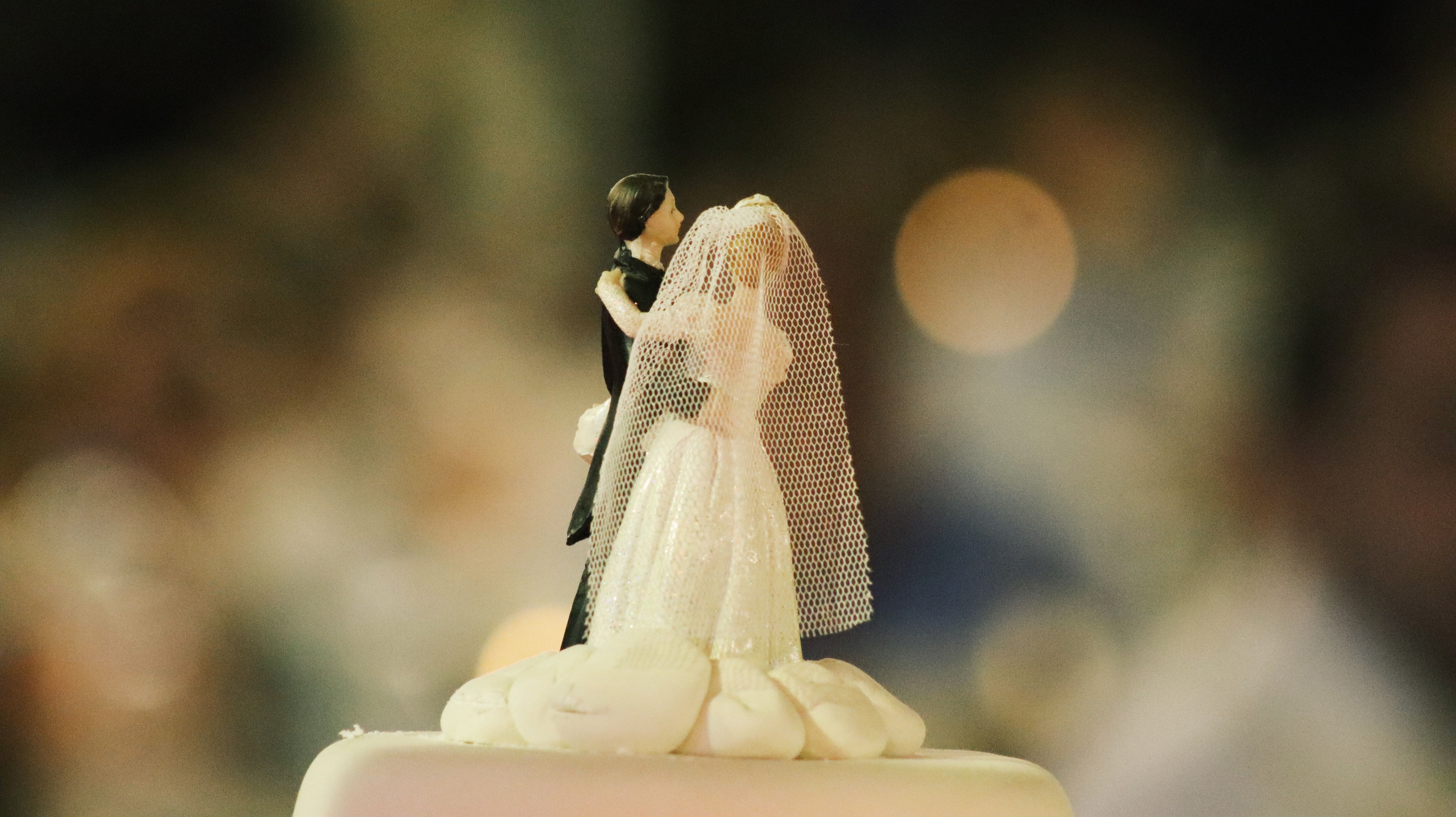
A wedding works the same way.
The couple at the altar has done their homework. They know exactly what they expect to get out of it, and it is not complicated. More time together. Evenings, weekends, someone to come home to. (Also, no more blind dates arranged by Mom.)
They have weighed the alternatives (other suitors, other lifestyles, staying single and keeping the whole closet). They have a rough idea of the costs, which will be staggering once the first child reaches college. They have agreed on the timescale: until death or forever, whichever comes first. They have even identified the key risks, and both sets of them will be at the reception.
Then they say it out loud, in front of everyone they know. For better or worse, for richer or poorer.
As business cases go, it is a good one. It even has a risk section.
And like every other business case, it is never read again.
Every Change Makes Sense on its Own
A few years in, the apartment in the city starts to feel small, so they buy the house in the suburbs. More space, a garden, better schools, and an hour of commuting each way. The house needs a second car, and the second car is the nice one, so somebody takes on more hours at work to pay for it. The garden is big enough for a dog, and the dog needs walking twice a day. And a man at the marina made them a very reasonable offer on a boat, which needs looking after every weekend.
Every one of those decisions was discussed. Every one of them was sensible. Every one was approved at the kitchen table, on its own merits, in about the time it takes to finish a glass of wine.
Not one of them was held up against the vows. Nobody at that table asked the one question the vows would have asked: does this give us more time together, or less?
Ten years later, they have the house, both cars, the dog, and the boat. They see each other on Sundays, at the marina.
Projects drift the same way, and the formal route is the more dangerous one. Scope creep at least looks like what it is. A change request comes with a form, an impact assessment, a number and a signature, and all that paperwork creates the comfortable impression that somebody has checked whether the project still makes sense.
Nobody has. The change was assessed against the plan: what it costs, what it moves, who has to do the work.
It was never assessed against the reason the plan exists.
Some change request templates even have a box for it, usually called Impact on Business Case. Where it exists, it is left empty, or filled in with a quick “N/A”, or a “Yes” with nothing written after it.
One big change assessed that way can wipe out the benefits on its own. Twenty small ones will do it more quietly, because each of them was perfectly reasonable at the time. The project itself carries on, on schedule and on budget, delivering everything on the plan.
It just stops delivering the reason it was started.
Nobody ever signed off on the total. They only signed off on the boat.
Read the Vows Again
The business case has to stay on the table for as long as the project runs, and it has to be the thing every deviation is measured against. Not the plan. The case.
That starts with one question, whether the template has a box for it or not. Every change request answers what it does to the expected benefits first, and only then to the costs, the timescale, and the risks. If the honest answer is “nothing”, somebody writes down why.
Then keep a running total. A change should be measured against the business case as it stands today, with every change already approved counted in, and not against the version that was signed eighteen months ago. Twenty small changes only stay small if nobody adds them up.
And at every stage boundary, the Steering Committee reads the whole thing again and answers one question: is this project still desirable, viable, and achievable?
PRINCE2 calls this continued business justification. It is the first of its seven principles, which has never stopped anybody from skipping it.
When the Reasons are Gone
Sometimes the answer is no.
The benefits have moved, or the costs have, or the market has, and the case that justified the project no longer holds. Every product on the plan can still be delivered.
It just won’t buy anything anybody needs anymore.
Here the analogy has to stop. For a marriage, that is a much harder conversation, and not one this blog is qualified to have.
A project has it easier. It is allowed to end the moment its reasons are gone. The methodology even has a name for it, premature closure, and it is not the worst thing that can happen to a project.
The business case was written to get the money. Its real job was always to tell you when to stop spending it.
The alternative is the project nobody believes in, and nobody will stop, absorbing budget and people for another year, because closing it would mean admitting the case stopped holding somewhere around the boat.
Fairy tales always end at the wedding.
Nobody wants to read about the change requests.