

Ask an organization which methodology it follows, and you will almost never get an answer. You will get an inventory.
“PRINCE2,” they say, and produce a folder. “Agile,” and produce a different folder, thinner, with better fonts.
What is being described is not a way of working. It is a shopping list.
Nobody has ever been fed by a list of ingredients.
The Tick
Somewhere on every shared drive there is a spreadsheet called Stage Gate Deliverables, and beside each line, a box.
Business Case: tick.
Project Initiation Document: tick.
RAID Log: tick.
Communications Plan: tick.
Lessons Learned Register, created on day one, still empty on day four hundred, ticked throughout.
The gate opens. The project proceeds. Somebody’s name goes on something. And at no point in any of it has anyone been required to decide anything.
What a Recipe Leaves Out
A recipe is what is left over after somebody else has done the thinking. Two hundred grams of flour. Fold, do not stir. Rest for an hour, covered.
That works, up to a point, and the point arrives quickly. The card does not say why the butter has to be cold, so it cannot help when the kitchen is warm. It says nothing about your oven, which runs hot. It assumes eggs of a size you do not have.
Every one of those corrections lives in the cook. None of them lives on the card.
Escoffier did not leave behind a list of dishes. He left a system. The brigade, the mother sauces, a structure from which thousands of dishes follow for anybody who understands the principle. The recipes were the output of the method, not the method itself.
Confuse the two and you end up with a kitchen full of index cards and nobody in it who can cook.
The One Checklist that Works
There is a checklist that saves lives every day, and it lives in a cockpit. The concession is worth making, because the difference between that checklist and the one on the shared drive is the entire argument.
At Wright Field in October 1935, the Boeing Model 299 took off, stalled and came down in flames. The pilot was killed. The aircraft was not defective. The gust lock had been left engaged. Too much airplane for one man to fly, the newspapers concluded. The design survived to become the B-17, and so did the short document its pilots wrote in response.
Every line on that card commands an action. Gust lock, released.
It was written after a specific accident, by the people who would have to use it, and it assumes a trained pilot who knows what a gust lock is and exactly why the other man died. Hand the same card to somebody who has never flown and it documents their death rather than preventing it.
A stage gate list assumes nothing and commands nothing. It does not say risk, priced. It says Risk Register, attached.
It is not a checklist of actions. It is a checklist of stationery, written by nobody anyone can name, after no accident anyone remembers, for a project that was not this one.
Ingredients are Not a Meal
Look at what the tick can actually certify.
It can establish that a Risk Register exists. It cannot establish that anybody has thought about risk for eleven consecutive seconds.
Two different claims, and only one of them is auditable, which is exactly why it is the one audited.
So the register gets filled. Twelve risks, because twelve looks conscientious where four looks idle and forty looks alarming. Each one scored on a five-by-five matrix nobody at the table can justify. The file is dated. The file is signed.
The file is a bowl of raw flour.
Decisions, not Documents
The remedy is not abolishing the checklist. Keep it. Just have it drive decisions instead of documents.
Who decides scope against cost, and on whose authority.
At what point a risk stops being watched and starts being funded.
Which changes can be absorbed, and which ones mean stopping and saying out loud that the plan is no longer true.
What gets said to the Steering Committee when the news is genuinely bad, and who is allowed to say it.
Every one of those can end in a document, and a document is a perfectly good place to keep a decision. What is not good is producing the container and announcing that the contents can be assumed.
Answering those questions means somebody making a judgment in public and carrying it long afterward. Ticking a box takes a mouse and nobody watching.
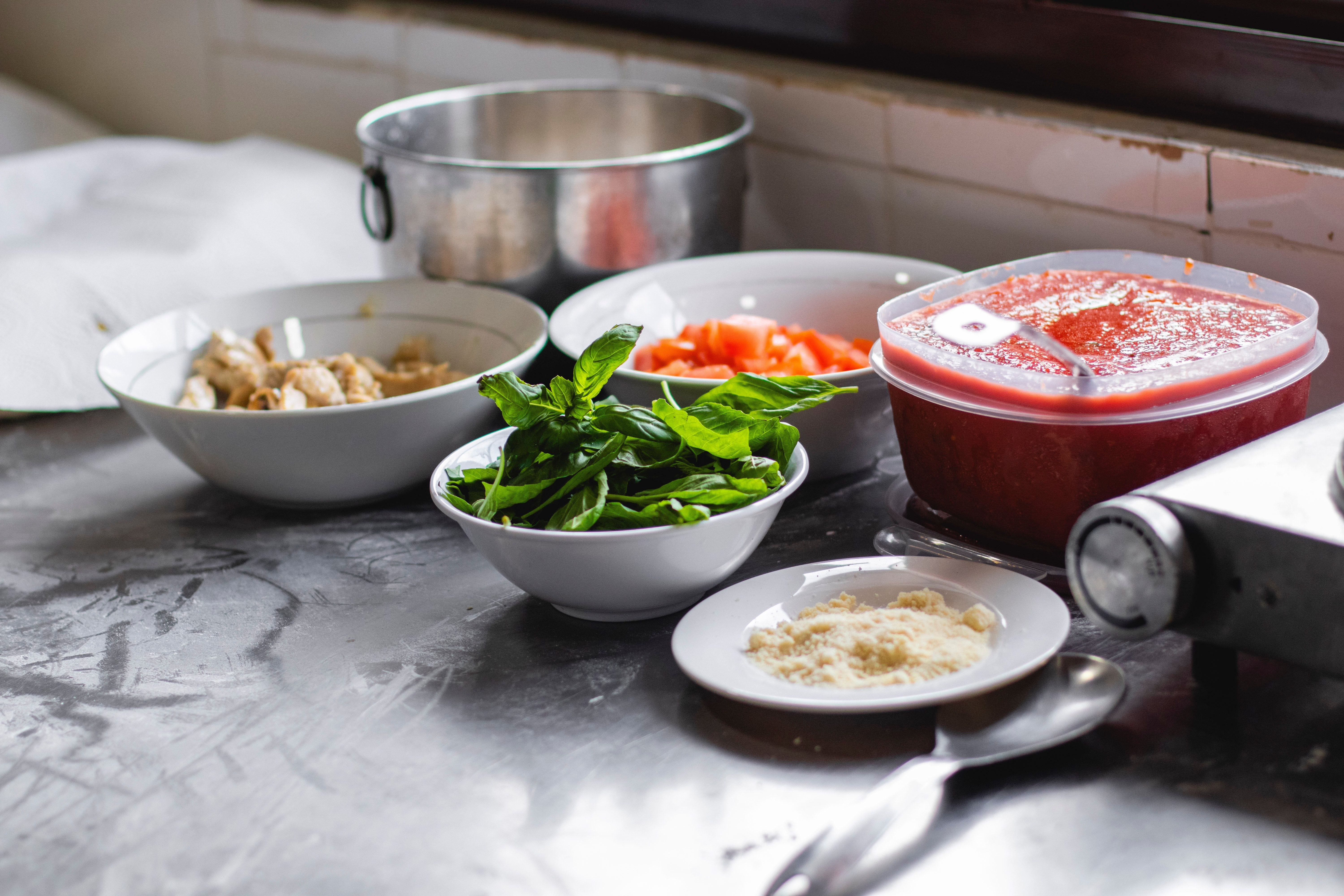
Mise en place is not the food. It is everything the cook does before service, so that when the orders start arriving, the thinking has already been done.
A row of labeled containers with nothing prepared in them is not mise en place.
It is shopping.