

“So, is it red, amber, or green?”
The project has been running for two years. It has spent several million, it touches six departments and a vendor, and somewhere inside it are forty people working on it full time. The Steering Committee has one question about all of that, and the answer is a color.
Nobody asks for it that bluntly, of course. What gets asked is that the progress report be kept “as efficient as possible”. Fewer pages. Fewer words. Something a busy Steering Committee member can take in between two other meetings, in about five seconds, no matter what the project means for the organization as a whole.
Five seconds is enough for exactly one thing. The traffic light.
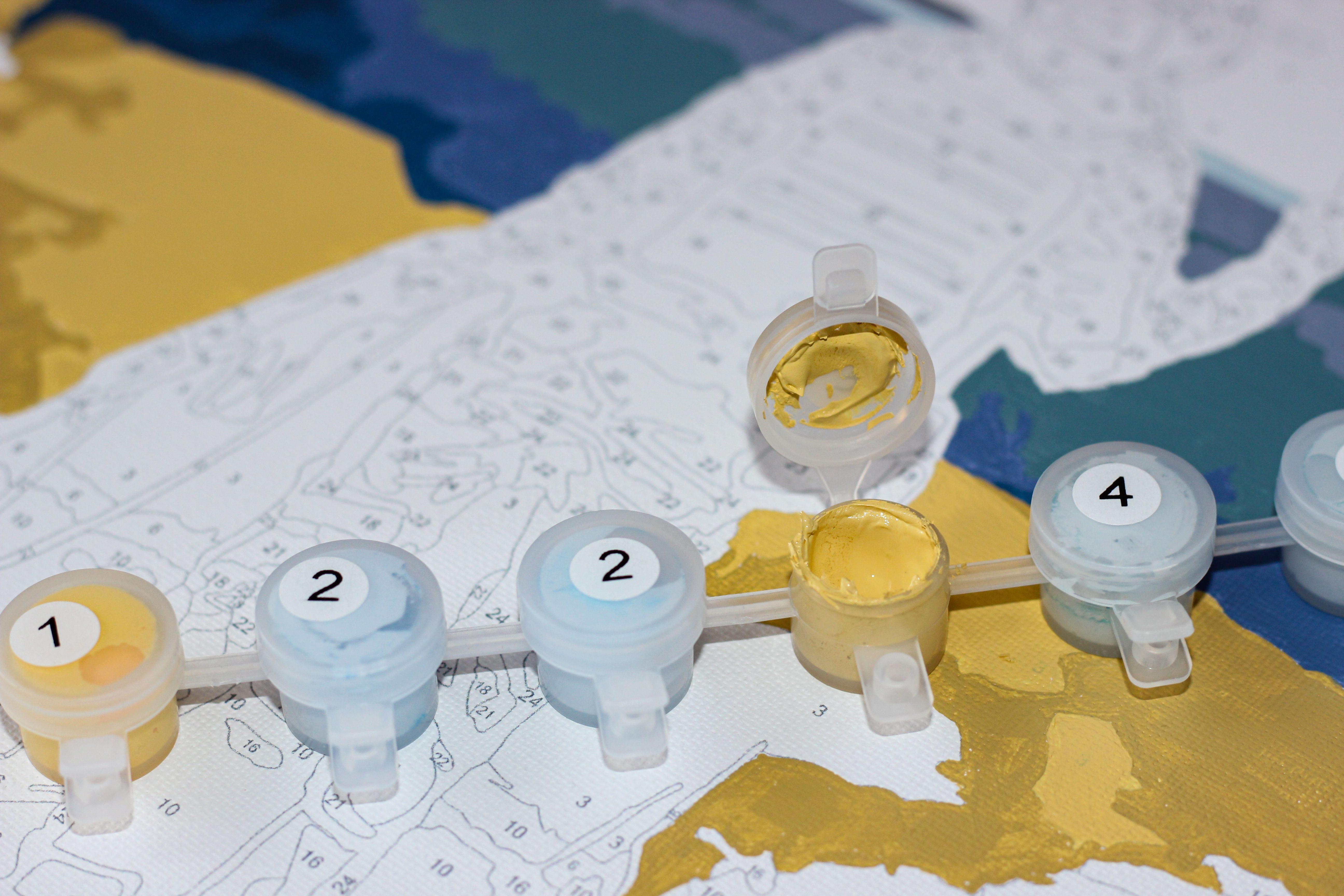
It is a paint-by-numbers kit with the numbers left off. Everybody colors in whatever looks right.
Some organizations have gone one step further and replaced the traffic light with actual smileys. A sad face for red, a happy face for green, and, our personal favorite, the indifferent face for amber.
:-|
Meh….
Everything Else is on Page Two
The methodology has not been abandoned. The project manager still fills in the full template every month: forecast expenditure, risks with their probability and impact, open issues, the quality of the deliverables. It is all there, in exactly the detail needed to steer on.
On page two.
On page one, at the top, sits the light. It is the highest level of abstraction a project report can reach. It does not even contain words anymore. Just a color.
The more thorough reports give every topic a light of its own. Time, cost, quality, scope, resources, each with its own little circle, and the overall status sitting above them all. It looks like six times the information.
Nobody can explain how two greens, two ambers, and a red add up to an overall green. But somehow they do. Every month.
There is nothing wrong with a traffic light as one indicator among others. The trouble is that it becomes the only one anybody reads. A Steering Committee can spend twenty minutes on the color itself, and the conversation is rarely about the project. It is about what the color will do once it leaves the room.
“Maybe it is best to leave it green for now...”
At that point, nobody is managing the project anymore. They are managing the color.
Green Until it Isn’t
A traffic light has no nuance and no context. Worse, it has no time in it.
Every project manager has written some version of this sentence: “At the time of writing, the project is still green, but it could very well be amber in two weeks.”
Read it again. Is that project in good shape, about to go wrong, or already on its way down? The sentence does not say, because the color cannot say. It describes today, and today is the one part of the project nobody can do anything about anymore.
A smiley tells you how the project feels this morning. It does not tell you how it will feel at go-live. And influencing how it will feel at go-live is the entire job of a Steering Committee.
A Color Needs a Number
Keep the traffic light, if the organization insists. Just make it mean something, and make it point forward.
Start by defining the colors before the project starts, in numbers. Green means the forecast lands within the agreed tolerances on cost and time. Amber means a tolerance is forecast to be exceeded unless something changes. Red means it will be exceeded, and a decision is needed from the people in the room.
That is how a paint-by-numbers kit works. Nobody holding the brush gets to decide that area seven would look nicer in green. The number decides.
The same goes for every light underneath the overall one. Time, cost, quality, resources: each gets its own criteria, in numbers, agreed in advance. Cost turns amber when the forecast at completion exceeds the budget by more than the agreed tolerance, not when the project manager has a bad feeling about it.
Then agree how the lights roll up. The simplest rule is also the most honest one: the overall color is never better than the worst color underneath it.
That is not a new idea. It is PRINCE2’s management by exception, and the word doing all the work in it is forecast. The project manager does not escalate because something has gone wrong. The project manager escalates because something is going to.
Then never let the color appear on its own. Next to it go the forecast at completion against the budget, the forecast end date against the plan, and the risks that could move either of them, with what is being done about each.
That fits on one page. It will not be read in five seconds. It will take five minutes, which is the least a two-year, multi-million project deserves.
Undefined, a traffic light is not management information. It is a mood.
Which is exactly why it turns into a smiley so easily.
A Steering Committee that steers on moods will get a project that stays green right up until the week it turns red, with nobody quite sure what happened in between.
And the most honest face in the room will be the one on page one.
:-|